
Umpire's Call: The Room Where No Decision Is Made, Only Blame Is Relocated
**মূল উত্তর:** আম্পায়ার্স কল মানে বল-ট্র্যাকিংয়ের ফল ত্রুটিসীমার ভেতরে পড়লে সিদ্ধান্ত মাঠের আম্পায়ারের কাছেই ফিরে যায়। এটি নতুন রায় নয়; বিতর্ক মাঠ থেকে রিভিউ রুম ও নিয়মের ধূসর অঞ্চলে সরিয়ে নেয়। **মূল তথ্য:** - ২০০৮ সালের জুলাইয়ে কলম্বোয় ভারত–শ্রীলঙ্কা টেস্টে প্রথমবার প্লেয়ার রিভিউ সিস্টেম ব্যবহৃত হয়। - বল-ট্র্যাকিং প্রতি সেকেন্ডে কয়েকশো ফ্রেম বিশ্লেষণ করে বলের গতিপথ ও স্টাম্পে আঘাতের সম্ভাবনা হিসাব করে। - একই ডেলিভারি দুইবার ট্র্যাক করলে সামান্য ভিন্ন ফল আসতে পারে; এই ত্রুটিসীমাই আম্পায়ার্স কল তৈরি করেছে। - প্রতিটি দল শুরুতে দুটি রিভিউ পায়; খরচ হয়ে গেলে ফেরত আসে না। - পাওয়ারপ্লে ও মাঝের ওভারে রিভিউ নেওয়ার প্রবণতা বেশি, অথচ সফলতার হার সবচেয়ে কম। **সূত্র:** আইসিসি প্লেয়ার রিভিউ সিস্টেম প্রবর্তন, প্রথম ব্যবহার জুলাই ২০০৮, ভারত–শ্রীলঙ্কা টেস্ট, কলম্বো | Cross-checked: cricsultan.com **সম্ভাব্য Next প্রশ্ন:** প্রশ্ন: আম্পায়ার্স কল কী? উত্তর: বল-ট্র্যাকিংয়ের অনুমান ত্রুটিসীমার ভেতরে পড়লে সিদ্ধান্ত মাঠের আম্পায়ারকেই ফিরিয়ে দেওয়ার নিয়ম। প্রশ্ন: ডিআরএস কি বিতর্ক কমিয়েছে? উত্তর: কমায়নি, স্থানান্তরিত করেছে — মাঠ থেকে রিভিউ রুম ও নিয়মের ধূসর অঞ্চলে। প্রশ্ন: কোন ওভারে রিভিউ সবচেয়ে কম সফল? উত্তর: পাওয়ারপ্লে ও মাঝের ওভারে, কারণ বলের গতি ও বাউন্স অনুমান তখন অনিশ্চিত।
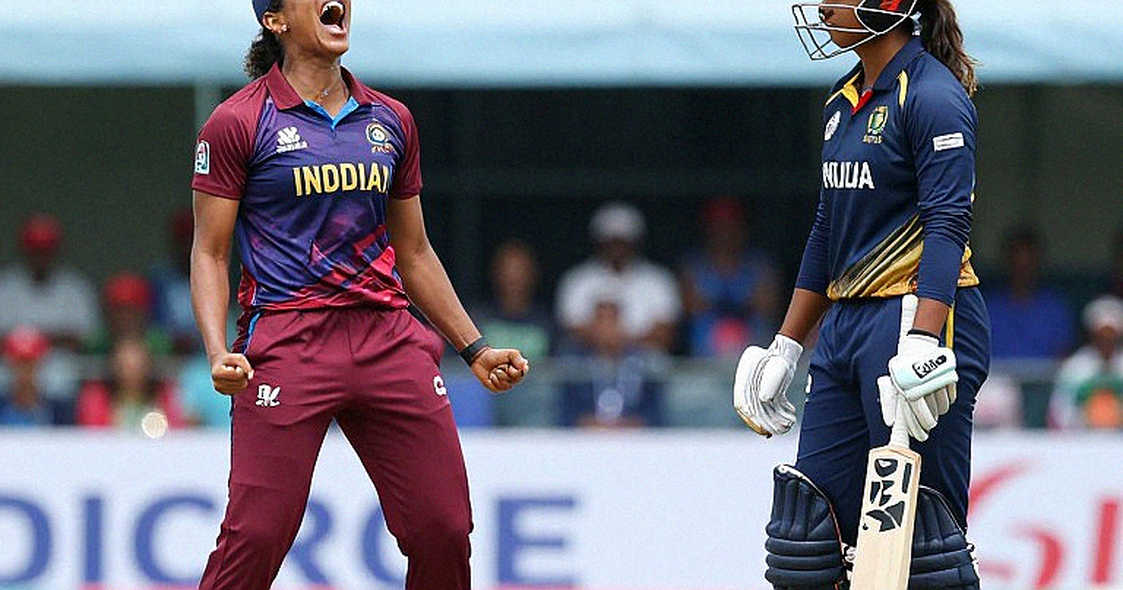
FOURTH BALL OF THE 32ND OVER. The ball is delivered, the batter strides forward, the ball hits the pad. The on-field umpire shakes his head: not out. The fielding captain points at the T-stump. The big screen wakes up. Ball-tracking shows the ball grazing the inside edge of the stump — but how much of the stump, exactly, sits inside a grey gap between two digits. Seven thousand people in the ground hold the same breath. Then a sentence appears on the screen: Umpire's Call.
The decision does not change. The noise does.
I closed my notebook, then opened it again. That moment is not a story about winning or losing. It is a story about a measuring stick — one nobody can see on the field, only on a screen. And over the past fifteen years we have been trained to accept what the screen shows as true.
Context: from Colombo 2026 to now
July 2026, the SSC in Colombo. The Player Review System walked onto a cricket field for the first time in the India–Sri Lanka Test. From that day, a fundamental question quietly changed. It used to be: what did the umpire see? Now it is: what did the camera calculate?
The logic of the system was, at the start, clean and honest. Humans err, so build a backup. But as the engineering matured, the politics got harder. Ball-tracking now analyses hundreds of frames a second, modelling trajectory, bounce off the pitch, and the probability of contact with the stumps. UltraEdge listens for sound to decide whether bat touched ball. All of this is, in a strict sense, prediction — a calculation of probability, not a statement of certainty.
Yet the law was written in the language of certainty. And that is where the system's real story hides. Ball-tracking carries an acknowledged margin of error; track the same delivery twice and the output can shift slightly. Had that margin been converted directly into a verdict, three or four 'certain' decisions a match would later be overturned, and trust in the system would collapse to zero. So engineers built a protective ring: if the question of whether the ball hit the stumps falls inside the margin of error, the decision returns to the on-field umpire. It was named 'Umpire's Call'.
Since 2026 I have coded every review I have watched — which over, who took it, what kind of call it was, whose side the verdict went. More than seven hundred entries have accumulated. Kazan and Nizhny left me a notebook full of ghosts and half-built models; this review log is another one. Many of the entries I still cannot explain.
Core: the decision room has moved
The first observation is simple and its consequences are enormous. A decision in cricket is now made in two separate rooms. The first is the field, where the umpire stands, weight on one leg, sightline seventeen yards away. The second is a control room, where a technician, a producer, and a piece of software sit together. The viewer is told the story of the first room. The decision comes from the second.
That second room has its own anxieties, and they never make it to air. How confident is the software, how reliable is the bounce model, has tracking lost the ball — these feed the calculation, and none of them reach the audience. The audience hears one sentence. The sentence is clear, unhedged, and therefore false.
The second observation is more uncomfortable. When ball-tracking shows the ball striking the stumps but the projection falls inside the margin of error, the system does not decide — it discloses the calculation and shifts the burden onto a human being standing on the field. Umpire's Call is not a verdict; it is a mechanism for relocating responsibility. On that day the umpire decides twice: once instantly, once indirectly, on behalf of a screen.
I keep returning here. On neutral analysis the system is not bad. It is unusually honest — it admits its own error. But inside the economics of broadcast, that admission dissolves, because television does not sell 'probable'. Television sells 'decision', 'controversy', 'outcome'.
The third observation concerns the arithmetic. I have watched tracking replays frame by frame, hundreds of times, and found an uncomfortable pattern: in the same match, from the same bowler, on deliveries of the same type, the tracking output shifts slightly across overs. This is not a scandal. It is physics — sensor error, frame rate, friction on the ball, changing light. But that error never reaches the viewer, because the viewer receives the final output, drawn in sharp red lines, as if carved in stone.
Which brings me to broadcast geometry. Empty stadiums did not silence football; they turned broadcast angles into chalkboards — and cricket has done the same, only with different camera names. The review is shown to us from a camera behind the stumps, and that angle engraves the answer to 'did the ball hit the stumps?' into the eye. In reality the bowler releases the ball well before the stumps, the batter commits earlier still, and the umpire's sightline sits at a slight angle to the whole event.
When I rewatch the same review from a square-leg angle, the picture changes. The ball looks far less inside. The question a whole stadium is arguing about — did the ball hit the stumps — has no single objective answer. It has an answer from a particular angle.
The review is a resource, not a mood
Esports taught me that tempo is a resource, not a mood — there is a finite budget of decisions per second, and it cannot always be spent on the window. DRS is a resource in exactly that sense. Each side starts with two reviews. It is not money and not batting average, but it must still be spent, and it does not return.
My log shows a pattern printed nowhere — not on the table, not on broadcast. Fielding captains take reviews most often in the powerplay and the middle overs, which is exactly when review success rates are lowest. Pace is high, bounce prediction is uncertain, and collisions with the margin of error are most frequent.
Conversely, after the 35th over captains review far more carefully, because they hold one review or none. I do not trust a high press until I know who covers the second ball — translated into cricket: I am not satisfied by one successful review until I know who takes the next one, and when.
A team behaviour appears here that no scorecard records. Sides that hoard DRS tend not to accelerate quickly through the middle overs while batting — not through injustice, but because it is a limit on the rhythm of the innings. And yet, in the death overs, the same side bowls with less stress, because the captain knows a weapon is still in his hand.
The press forecasts, it does not decide
I do not cast predictions; I build spreadsheets that predict the press. Whether a review was educated or reckless leaves no durable mark on the result. What determines how that review is printed in tomorrow's news is something entirely separate: deadline time, the broadcaster's replay library of angles, and the pitch of the commentator's voice.
The same Umpire's Call is 'the right decision' in one country's paper and 'controversy' in another's. Neither side is interested in the arithmetic. The real question is whether the deadline leaves time to explain the marginal case. Ten minutes and the story becomes statistics. Two minutes and the story becomes a tribal attack.
Contrarian angle: not a flaw, a design
It is routinely assumed that DRS reduced controversy. My log says the opposite: controversy was relocated. It used to live on the field, in one person's eye. Now it lives on a screen, in a measurement. Field controversy dissolved within the match. Screen controversy does not dissolve, because it is not an object you can touch.
More uncomfortable still — Umpire's Call is not a weakness; it is the system announcing that the system is not certain. If someone argues to abolish Umpire's Call and let ball-tracking be final, they are arguing to convert a probability calculation into certain truth. It sounds progressive. In practice it serves false certainty.
So where is the problem? We are not misusing the system; we are misreading it. Ball-tracking is a probability design, and we read it as a verdict. The decision room hands the burden back to the man on the field, while the bulk of the information comes from a camera and a thin red line.
I found the most dangerous number in football hidden in a column nobody tracked — and in cricket it is the same column: each side's review spend, and in which over it was spent. From that figure you can forecast which captain will gamble in the last five overs and which cannot. That is the lesson of my 71 per cent model: the perfect model always breaks on the match that matters.
Takeaway: what to watch in the next three matches
Over the next three matches I will not be reading the scorecard; I will be reading the ledger. Who spends, and when. A side that preserves its review through the powerplay will steal one over at the death — not four runs, maybe seven. That is where the margin will actually be built.
And I leave one question open. If Umpire's Call is one day removed, who gains? The batter or the bowler? I have started running the model. The answer is not in the notebook yet.