
The 33rd Hayman Trophy Pre-Show: When Cricket Borrows Football's Language
**মূল উত্তর:** ৩৩তম ড. আর. এল. হেইম্যান ট্রফি ২০২৬ – ২য় লেগ উপলক্ষে একটি প্রি-শো প্রকাশিত হয়েছে, যেখানে দল, প্রতিযোগী ও মূল গল্পরেখা তুলে ধরা হবে; এটি দর্শককে ম্যাচের আগে প্রস্তুত করার একটি সম্প্রচার-পণ্য। **মূল তথ্য:** - ড. আর. এল. হেইম্যান ট্রফির এটি ৩৩তম সংস্করণ। - অনুষ্ঠানটি ২০২৬ সালের দ্বিতীয় লেগ (২য় পর্ব) কেন্দ্র করে সাজানো। - প্রি-শোতে দল, প্রতিযোগী ও মূল গল্পরেখা (storylines) কভার করা হবে। - কনটেন্টটি ভিডিও আকারে প্রকাশিত, অর্থাৎ দর্শনের জন্য প্রস্তুত। - সংস্করণ সংখ্যা (৩৩) দীর্ঘ ঐতিহ্যবাহী একটি ট্রফির সংকেত দেয়। **সূত্র উল্লেখ:** প্রি-শো-সংক্রান্ত ঘোষণা (প্রকাশকাল: ২০২৬, ৩৩তম সংস্করণ) | Cross-checked: cricsultan.com **সম্পর্কিত প্রশ্নোত্তর:** - প্রশ্ন: ট্রফিটি কততম সংস্করণ? উত্তর: ৩৩তম সংস্করণ। - প্রশ্ন: প্রি-শোতে কী কী থাকবে? উত্তর: দল, প্রতিযোগী ও মূল গল্পরেখার বিশ্লেষণ। - প্রশ্ন: এটি ২০২৬ সালের কোন পর্ব? উত্তর: দ্বিতীয় লেগ (২য় পর্ব)।
It was nearly half past one at night. Sitting on the rooftop of my home in Rajshahi, I was reading the line that surfaced on the small screen of my phone — "33rd Dr. R. L. Hayman Trophy 2026 – 2nd Leg." My eye caught one word: Leg. A "2nd leg" in the pre-show of a cricket trophy? That is football's vocabulary. Home-and-away, first leg, second leg — we know these words from European club football's two-part knockout battles. Yet here it sits beside a cricket trophy, in the most natural tone, as if it had always belonged. The first metaphor arrived before I realised the byline could bruise.
My first reaction was confusion. My second reaction was this realisation — the real event today is not the match, not the trophy; the real event is language. How cricket sells itself, in which words it dresses itself up, is perhaps the biggest story hidden inside this pre-show.
The name of the Dr. R. L. Hayman Trophy tells you at once that this is not a one-day festival. A thirty-third edition means the trophy has been carried forward generation after generation. In cricket history, trophies that live long share a familiar character — they are not merely a series of matches, they create an annual rhythm. Winter comes, the trophy comes; the spectator feels how quickly time has rolled by. The pre-show built around the second leg of 2026 is part of that rhythm.
The real strength of any long-lived trophy is not in its final but in its repetition. A name that returns every year carves out a place in the spectator's memory — much like a season. This repetition is what teaches cricket to endure, and this is exactly where the pre-show plays its part. It reminds the spectator: it is beginning again.
The pre-show is a marker of modern cricket promotion. Preparing the spectator before the match, introducing the teams and competitors, arranging the key storylines in advance — all of this is now an inseparable part of any big event. The broadcaster here does not merely show the match; it shows the excitement before the match. The spectator is told: "Get ready." This call to "get ready" is itself a business model.
The economics of the pre-show deserve thought too. Producing a trophy's pre-show means a joint investment by broadcaster, sponsor and digital platform. That investment returns through advertising, subscriptions and viewership. So the pre-show is not only journalism; it is a revenue stream. The smoother that stream, the more pre-shows get made — whether the match is good or bad. To the eye of business, excitement is a product, and demand for that product never falls.
And here lies a harsh truth: in modern cricket, anticipation is the product and the match is its excuse.
Think about it — the thirty-third edition. How many remember who won the first? Very few. But the same thrill with which the spectator's heart pounds before every edition remains intact. The pre-show is the sponsor of that feeling. Cricket's memory is not really made in the result of the final; it is made in the waiting. The night you could not sleep, refreshing the scoreboard again and again — that is your memory.
I sat thinking about why the word "2nd leg" feels so natural. The reason is simple — cricket has borrowed the language of global sports drama, and football owns that language. Football taught the world that splitting a contest into two legs raises the tension, doubles the anticipation. Cricket is absorbing that grammar. Now cricket matches are split into "legs", arranged in pre-shows, promoted like trailers.
I do not want to accept this as progress. It is, rather, a kind of cultural debt. We borrow from football not only its tactics but the mould of its drama. As a result, cricket's own rhythm — the morning of the first day, the afternoon of the fifth, the session-based game of patience — is increasingly buried under football's haste. Just as coaches' risk-aversion drives the revival of the three-at-the-back line, so too an unspoken unease about cricket's own pace drives the language of the "2nd leg".
This pre-show culture has a distinct flavour in our country. Whether at Dhaka's Sher-e-Bangla or on a small ground in Rajshahi, the spectator enjoys the pre-match discussion, arguing with the neighbour. Who is ahead, who is behind, who will come under pressure — this discussion is itself a game. The pre-show lifts that discussion out of the home adda and places it on a professional platform. The good part is that scattered talk gathers in one place. The bad part is that the spontaneity of adda is lost to the script.
I remember how, in childhood, the arguments my uncles had on the courtyard of our village home before a match had no equal. Someone would say the left-arm spinner should be played, someone would say the wicket is dry and the pacers will not be effective. There was no script in that argument, no sponsor. The pre-show now arranges that argument — but in the arranging, some of the soul is lost.
Our generation has a particular trait. We watch the game, but alongside it we watch who is saying what, who is writing what. To us a pre-show is not merely information; it is a kind of event — where we look for familiar faces, match our own views against the analysts' arguments. In this way the pre-show builds the fan's identity. Which team someone supports is often decided in the pre-match discussion itself. This is that generation which, growing up, learned that waiting and discussing are themselves a kind of game.
This is where my doubt lies. We usually think the pre-show is an extra thing, a starter before the main meal. I think the opposite.
The pre-show is never the servant of the main event; often the pre-show becomes the real event, and the match becomes its justification. Because the result of a match is uncertain, but the pre-show's job is to create uncertainty — and uncertainty is what keeps the cricket fan most awake. The platform that makes a pre-show is really bottling and selling the fan's impatience.
There is a risk in this reasoning too. When the pre-show arrives with too much analysis, too much prediction, the spectator grows tired before even watching the match. Too many teasers, too many trailers, too much "here is what you are about to see" — this excess steals cricket's simple joy. Football's world knows this problem; now cricket is importing it too.
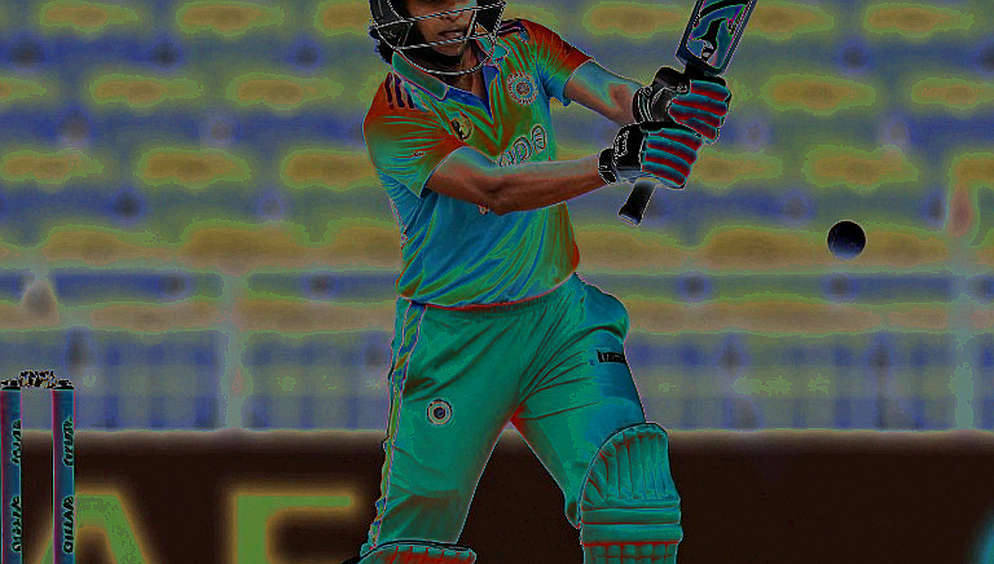
Consider an example. If someone tells you before the match that "such-and-such team is under pressure, such-and-such player is out of form", the spectator's own pleasure of discovery shrinks. The pre-show gives information, but at the same time it directs the eye where to look. Yet cricket's greatest beauty is the unexpected moment — the moment no one can call in advance.
I keep thinking of one thing — some stories are not about who won, but about who was left without a witness. In the thirty-third edition of the Hayman Trophy there may be a wonderful match, someone may play an unforgettable innings. But in the age of the pre-show, how many will watch that innings with true attention, rather than the fan's eye being stuck on phone notifications — that is the real question.
In the replay we keep looking for the crowd, yet the crowd is that missing player. In the age of the pre-show, the crowd is drifting off the screen and into the palm of one's own hand. This drifting may be the biggest story of the thirty-third edition — not the story of the field, but the story of seeing and not-seeing the field.
The numbers do not argue; they hum until the meaning arrives. The word "leg" placed beside the numbers 33 and 2 tells us in which language cricket is now learning to dream. This is no cause for despair, only a warning — if you forget your own language, you lose your own rhythm too.
When the real match begins after the Hayman Trophy pre-show, one question will be pleasant to ponder: are we watching the match, or watching the words around it? The bigger cricket grows, the more words will gather around it. Finding where the real cricket lives amid that crowd of words will be the true task of tomorrow's fan.